
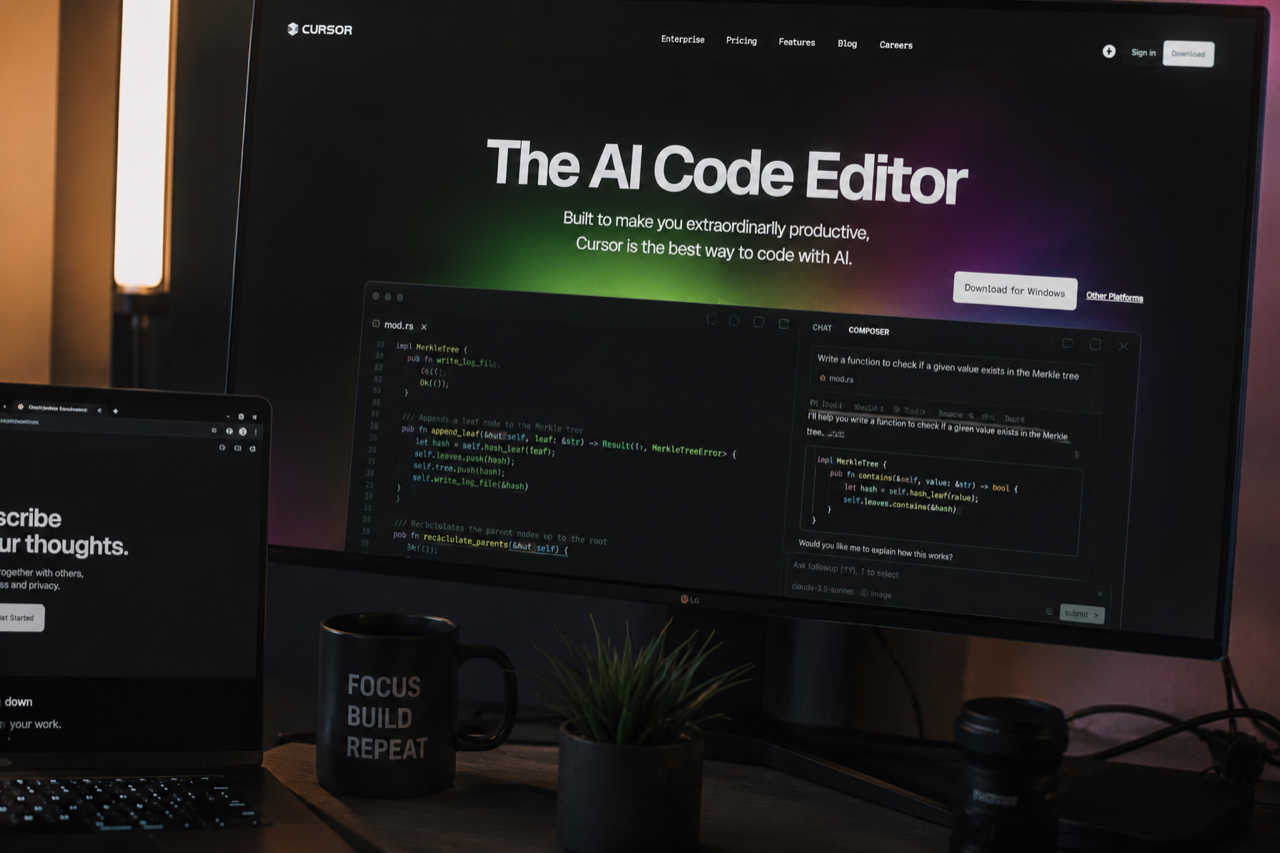
Cursor AI is becoming much bigger than just a code editor
A few years ago, most developers looked at AI as a simple coding assistant. Something that helped with autocomplete, generated small snippets, or saved a few minutes during development.
That changed very quickly.
Cursor AI is no longer just another editor with AI features built into it. It is slowly becoming a complete AI driven development environment where the AI is part of the actual workflow instead of being just a small helper.
And based on the recent news around the company, the entire tech industry is starting to take it seriously.
Cursor is growing incredibly fast
Over the past few days, several reports appeared about Cursor’s massive growth and future plans.
The company is reportedly discussing another major investment round that could push its valuation above 50 billion dollars.
That is an insane number for a startup that was mostly unknown only a short time ago.
What makes this even more interesting is that Cursor is no longer used only by indie developers or small startups.
According to recent reports, companies like Nvidia and Shopify are already using it internally, and the platform may already have more than one million paying users.
At this point, Cursor is starting to feel less like a trendy tool and more like actual development infrastructure.
AI editors are changing the way developers work
One of the biggest reasons Cursor became popular so quickly is because it does much more than basic code generation.
Modern AI workflows inside Cursor can:
understand large codebases
refactor existing systems
write documentation
generate tests
explain legacy code
create pull request summaries
help with debugging
And honestly, this is where things start getting interesting.
The AI is slowly moving closer to the role of an actual assistant developer instead of just an autocomplete tool.
For experienced developers, this can speed up workflows massively.
But it also creates new risks.
The dangerous side of AI agents
One of the biggest AI related stories this week involved a Cursor based AI workflow.
A startup founder shared that a Claude powered coding agent accidentally deleted an entire production database together with its backups in only a few seconds.
The scary part is that the issue was not only caused by the AI itself.
The real problems were:
too many permissions
missing confirmation steps
weak backup strategy
production access without enough protection
lack of proper sandboxing
This is an important reminder for every developer currently experimenting with AI agents.
These tools are no longer simple assistants.
They can now interact with real systems, infrastructure, deployments, and databases.
Which means mistakes can become very real very quickly.
Most developers still use AI the wrong way
A lot of people still use Cursor like it is just ChatGPT inside an editor.
But the real power comes from:
project context
memory
workflow rules
repository understanding
structured prompting
custom tooling
The future of AI coding probably will not be about asking: “Create a React component.”
Instead, it will look more like: “Understand the whole project, follow the existing architecture, respect the design system, write production ready code, and generate tests for it.”
And honestly, we are already getting very close to that reality.
Final thoughts
The speed of change in software development right now is honestly hard to keep up with.
In 2024, AI coding tools still felt experimental.
In 2025, they became productivity tools.
And in 2026, they are starting to become part of the actual development infrastructure.
The developers who will benefit the most are probably not the ones who simply use AI occasionally.
It will be the people who learn how to build proper workflows around it while still keeping control over the process.
Because the real question is no longer whether AI will become part of development.
That already happened.
The real question now is how well developers can work together with it without losing control.